
By Gaurav Bhagat, Founder & MD, Consortium Gifts
New Delhi [India], November 18: What does a company communicate to someone before they attend their first meeting, interact with their manager or understand the organisation’s culture? Increasingly, the answer is sitting at their doorstep: a welcome kit.
For years, employee welcome kits were treated as a routine joining-day formality. A branded notebook, a pen, a coffee mug, an ID-card holder and perhaps a backpack were packed into a box and handed over to a new employee. The exercise was largely about putting the company’s logo on everyday merchandise. Today, that perception is changing. Welcome kits are evolving into an important touchpoint in employer branding, employee experience and corporate identity.
As businesses compete not just to attract talent but also to create workplaces where people feel valued, the employee experience is beginning much earlier than the first appraisal or performance review. It starts with the offer letter, the communication before joining and, increasingly, the first physical interaction with the organisation.
The Business Behind the Welcome Box
The opportunity is larger than it may initially appear. An industry estimate cited in the 2023 as India’s corporate gifting market at approximately ₹12,000 crore. Though this metric is broader than welcome kits, it does highlight the fact that corporates view gifting as a strategic part of their operations. Such is the increasing importance of physical gifting that organisations are no longer viewing corporate gift products as a cost of branding. They are thinking much more about how meaningful products can contribute to and deepen relationships with employees, customers and other business partners and welcome kits are an ideal medium for this.
From Logo-Heavy Swag to Goods People Actually Need
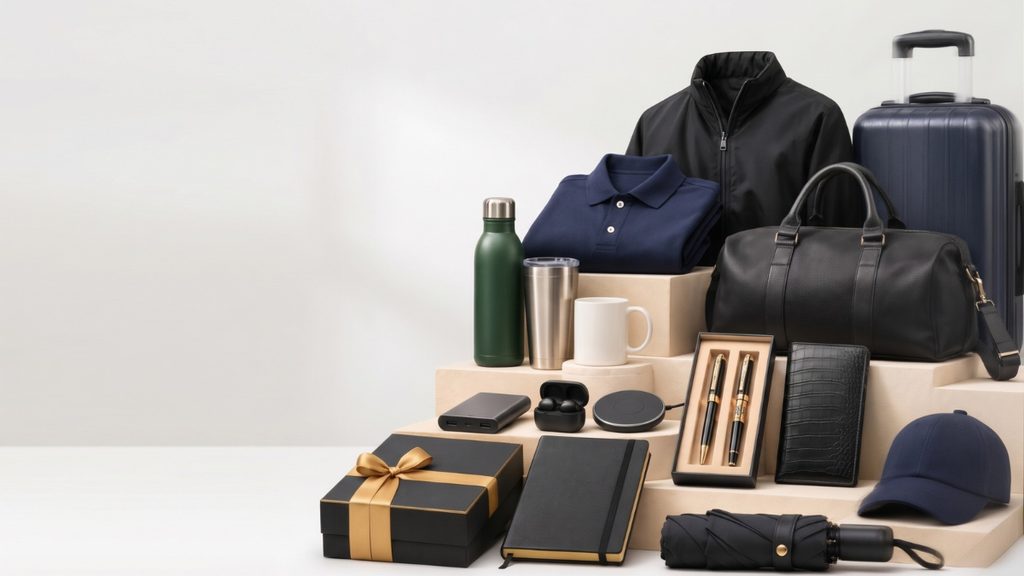
One of the most notable evolutions in the history of corporate gifting is that there’s been a shift from uninspired, logo-heavy swag toward merchandise people would want to use. Employees already receive promotional merchandise at conferences, events and corporate gatherings. A welcome kit needs to offer something more meaningful. A well-selected kit might feature a high-quality backpack, an insulated tumbler or water bottle, a desk organiser, a piece of tech, a notebook or a well-chosen lifestyle item. The idea is not to fill a box with as many things as possible. It is to find offerings that become part of the recipient’s life and that represent the organisation’s character and high standards.
We’ve seen this changing landscape first-hand at Consortium Gifts, working with global giants like Salesforce, EY, Deloitte and many more. The demand for s such as these, is indicative of a broadening sentiment towards how a corporation perceives its employees, customers and investors.
The First Impression Is Also a Question of Belonging
A welcome kit cannot replace a supportive manager, a healthy work environment or meaningful career opportunities. However, it can make an employee feel acknowledged at a particularly important moment: the beginning of a new professional journey. 33% of employees were engaged. While the stats highlight why it’s worth trying to improve the employee experience, engagement in today’s workplaces takes more than a – right place, right time, a few days into employment, gesture. Personalisation can personalise the gesture and, in the not-so-distant future, it can do so with more greater perceived significance.
It can be a note of welcome from the newly-installed leader of a new joiner, a new product suited to the role of an employee, or a kit representative of the culture of the organisation, rather than something that simply checks the box. A welcome kit is one small gesture that can be meaningful as younger generations’ expectation of its workplace grows. 94% of Gen Z respondents and 97% of millennial respondents in India believe on-the-job learning can help their careers, according to a 2025 Gen Z and millennial survey by Deloitte.
The Welcome Kit Is Even More Timely Due to Hybrid Work
Trend Remote and hybrid work has shifted the way we on-board. Not every new employee walks into a corporate office on their first day. Many begin their journey from another city, a home office or a different geographical location altogether. In such cases, a welcome kit delivered to an employee’s doorstep becomes the organisation’s first physical introduction. It brings a sense of connection to someone who may not meet their colleagues in person for weeks. But this needs to be executed as part of a bigger plan. Would you manage product choice, personalisation, packaging, stock, address management and last mile delivery?
For large organisations onboarding staff across a number of cities, this isn’t a simple gifting exercise, it’s a logistics and execution challenge. That’s where we see corporate gifting specialists coming into their own; the fact they can select products, ensure quality standards at bulk-buy level, and manage delivery at the scale, can determine whether this becomes a one-time gift or a scalable employee experience.
The Next Big Shift: Personalisation, Practicality and Sustainability
The shape of welcome kits in the future will be defined by three critical factors: personalisation, everyday usefulness and sustainability. Organisations are becoming more conscious of what they put inside their boxes. Reusable drinkware, products made from recycled materials, bamboo-based accessories, cork details and practical lifestyle products offer alternatives to disposable promotional merchandise.
Equally important is avoiding excessive packaging and unnecessary products that are unlikely to be used. Personalisation will also move beyond simply printing an employee’s name. Product mixes will also differ depending on the person’s role and who they work for, seniority and the type of work environment they are based in. For a remote technology professional, the practicality of desk accessories and tech must-haves, as opposed to the travelling executive who would favour a more mobile ready approach including organisers, backpacks and travel accessories. The best welcome kits will be a combination of the organisation’s identity and the recipient’s needs.
From Joining-Day Gifts to Year-Round Employee Experiences
Perhaps the biggest opportunity is to stop viewing welcome kits as an isolated joining-day activity. The same philosophy can extend to work anniversaries, promotions, leadership milestones, employee recognition, festive celebrations and other important moments in an employee’s journey. It’s an opportunity for companies to assemble a more coherent gifting and recognition plan instead of miscellaneous buys that happen every so often throughout the year. For B2B gifting solution providers, it’s also a change in the market. Instead of providing a product, they will develop gifting journeys. Ultimately, a welcome kit is not measured by how expensive the box looks or how many products it contains. Its value lies in whether the employee finds it useful, whether it reflects the organisation’s values and whether it makes the individual feel that their arrival matters.
The first day at work may last only a few hours. The impression a company creates, however, can last much longer. And increasingly, that impression begins with a box.
If you object to the content of this press release, please notify us at [email protected]. We will respond and rectify the situation within 24 hours.