New Delhi [India], November 23: For a long time now, academic achievements have been used as the main criteria for determining a pupil’s progress in studies. Grades and scores definitely play an important role in the process, but they comprise just one of many sides of a child’s development. It is possible that a pupil gets good results in exams and at the same time requires certain skills to be developed—such as communication, teamwork, creativity, leadership and decision making.
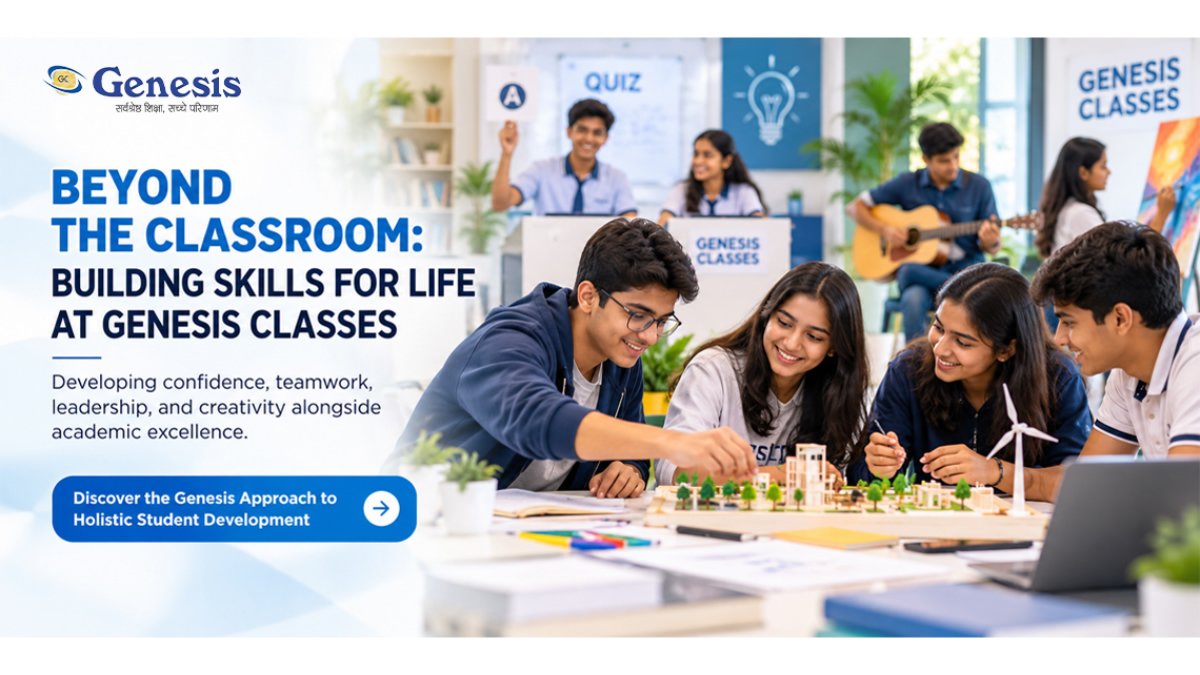
This is the place for the significance of co-curricular activities in the process of school education. Sports, debating, music, dancing, theatre, drawing, quiz, public speaking, club and community projects allow children to experience some aspects of life that are not always included in textbook and exam training.
At Genesis International School, education is more than studying in the classroom. In a well-balanced educational process, a child has an opportunity to follow his/her interests, take part in different activities, interact with people and become a more confident person.
Why Co-Curricular Activities Matter in School Education
Learning is not only about acquiring knowledge. It is important to learn how to use the knowledge acquired, express oneself and solve problems while working along with other people.
Co-curricular activities are used to provide learners with an avenue to develop the aforementioned skills practically. In debating, one will have to gather information on the topic being debated, arrange his/her thoughts and present an argument. Team games involve working as a team by the learners. Performance on the stage is helpful in boosting the confidence of a learner.
It is, therefore, important to use such activities as a complement to the traditional learning process. This can be achieved at Genesis International School.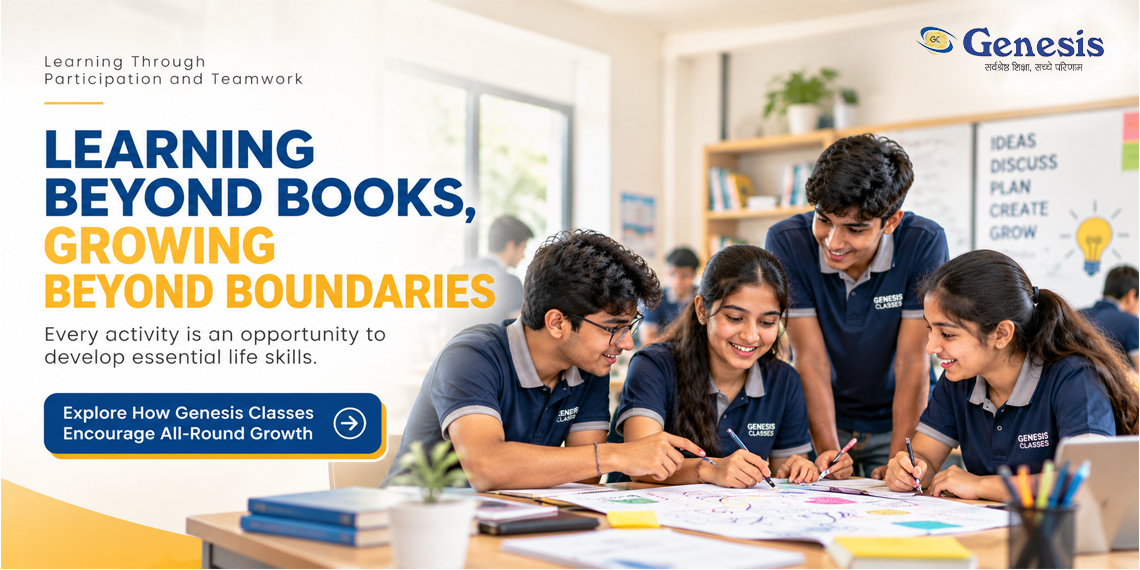
Building Communication and Public Speaking Skills
Good communication is important in most aspects of life. If the student becomes a doctor, engineer, entrepreneur, researcher, teacher, or works in any other profession in future, good communication can make a lot of difference.
There are plenty of co-curricular activities that give a chance for the development of good communication. There are debates, elocutions, presentations, quizzes, theatre and other public-speaking activities that make students talk and listen.
A naturally shy kid may find it important to get engaged in some small group activity as a first step in this direction. In the long term, taking part in discussion or speaking in public may become normal for him.
In Genesis International School, encouraging kids to take part in these activities can make them more confident about expressing their opinion and at the same time learn the importance of listening to other people.
Developing Teamwork and Cooperation
Tests usually assess individual performance. However, in reality, success is reached due to the ability of working in collaboration with others.
While working together in team games, group projects, school associations, theatrical plays, and cultural events, children understand the concept that all people have certain skills to accomplish the same purpose. Children learn how to divide tasks, to cooperate with their peers, to manage disputes and assist in reaching the common aim.
These abilities may prove to be quite helpful when children start studying at the university and further work.
Encouraging Leadership and Responsibility
Leadership is not only about being in the forefront. It is about taking responsibility, making decisions, assisting others, and taking responsibility for the consequences of these decisions.
Co-curricular activities give the chance for the students to apply these skills on a smaller scale. For instance, a student might be asked to organise a school event, to be a team leader, direct some activity for the club, or be responsible for leading a certain part of the whole process.
Thanks to these activities, it is possible that the students will understand the quality of leadership, including listening and cooperation.
In Genesis International School, giving the students the opportunity to practice these skills, it is possible to make them confident in their decision-making skills. And in case, even if something goes wrong, students will understand another important thing—leadership also means adaptation and finding solutions.
Creativity That Cannot Always Be Measured by Marks
Not all abilities of a child are showcased during an examination setting. Some children might be able to express their talent through means such as painting, music, dancing, acting, writing and design.
These methods would give some of these children a chance to explore their ideas even if there is no right or wrong answer every single time.
Art, music and the theater could give students a chance to explore, experiment and interpret. Students can learn how colour, sound, movement and language can express certain ideas and feelings.
It will not mean that these creative endeavours are separate from academic development. These would enable children to think creatively when solving problems and looking at certain familiar problems from a whole new perspective.
Teaching Discipline Through Sports and Physical Activities
People usually regard sports as healthy exercise, and education in this sphere goes far beyond this notion.
Participation in sports can provide discipline, determination, patience, and respect for rules to the students. Both victory and defeat are experienced by children in sports. The child may win at one competition and lose at another one. Ability to take both victories and defeats could be helpful in developing emotional stability.
Team sports could be beneficial for communication skills, and individual sports can provide the opportunity for children to learn responsibility for their training and actions.
Physical exercises can be the time when students can have a rest from studies. Balance can be achieved, and the combination of studying and sports becomes possible.
At Genesis International School, sports could become an integral part of the educational process of the students.
Learning to Handle Failure and Setbacks
One of the key things that co-curricular activities can teach people is that failure does not mean that learning has stopped.
When it comes to exams, students tend to concentrate only on the grades that they have received. But co-curricular activities are another story. There might be situations where the student has lost the debate, missed the shot at the match, forgotten their lines when performing and failed to execute their artistic project properly.
It might be sad for them in the first place, but it also gives them a chance to analyse and learn from their mistakes.
The thing is that students learn how to benefit from their mistakes by figuring out what went wrong and practising until they are ready.
Strengthening Emotional and Social Skills
The idea of interpersonal relationships is something that could be taught to children both formally and informally.
When it comes to co-curricular activities, the students are put in an environment where they have to work together, bargain, distribute responsibilities and handle different types of people. These activities may eventually end up helping the children socially and emotionally.
For instance, collaborating in doing some sort of task may demand compromise from the students, whereas playing some sort of violent game may demand them to control themselves. Working on any community activity may help the students understand the feelings of the people outside their environment.
These activities may end up making the students develop qualities like empathy, patience, respect and consciousness about one’s existence.
Helping Students Discover Their Interests
Education is also a time of discovery. Students might not be aware of things that they like or their talents.
The student who signs up for a music class casually will come to realise his love of performance. The one that gets into the debating club may end up loving public speaking. Students that don’t play any sport may discover their love for a specific sport after trying it out with other students.
It would be best if there were different kinds of co-curricular activities that will help students experience different things without forcing them to make decisions about their life while they are still young. This is the environment offered at Genesis International School.
Supporting Academic Learning, Rather Than Competing With It
It can be said that co-curricular activities detract from study time at times. But, with proper planning, these two do not necessarily have to compete against each other.
Many co-curricular activities help develop skills which are useful in learning in class. Debates make students do research and think critically. Quizzes make them retain what they have learnt and think quickly. Theatres make students expressive through their language. Scientific clubs may make them conduct experiments. Team projects help in organising and collaborating.
Students must have sufficient time to study, relax, exercise and pursue their hobbies. An organised educational institution should ensure that students enjoy all these without letting any one aspect overshadow the others.
At Genesis International School, an appropriate educational approach will help students appreciate the complementary nature of academic excellence and personal development.
The Role of Schools in Creating Opportunities
The child can show some interest and abilities, but they need the appropriate environment to foster them.
The role of schools in this process is to give a chance to use different facilities, qualified teachers, competitions, clubs, events and organised activities. Of course, it is vital to create an appropriate atmosphere where children will feel free to try something new.
Not all of them will succeed at once. Some children may join any of these activities just for fun, but some may become really good at it with time. What is important now is giving a chance to join these activities.
It is also important that children get some understanding from their teachers and mentors that it is not only about winning a competition but also about how to prepare, practice, cooperate and perform.
Conclusion
Examinations can tell a lot about the preparedness of a child academically, but there are some traits that a child needs in order to be successful in the future that do not get revealed through exams alone. Traits such as confidence, teamwork, creativity, communication, leadership, resilience, and emotional intelligence are developed through experiences that take place beyond exams and academics.
These kinds of experiences happen through co-curricular activities. Co-curricular activities provide a child with the chance to explore their interests, to work together with others, to confront problems, express themselves and also to gain experience from their successes and failures.
Therefore, the skills that a child develops through the field, stage, debates, creativity, and teamwork cannot be measured in terms of grades but they can last for a lifetime in a child.
If you object to the content of this press release, please notify us at [email protected]. We will respond and rectify the situation within 24 hours.